By the mid-’90s, goth had enjoyed about as much daylight as it could stand. Interview with the Vampire made box-office bloodsuckers of Tom Cruise and Brad Pitt in 1994, and The Cure’s “Burn” opened the chart-topping soundtrack to The Crow. But by 1997, Saturday Night Live was sending up the scene with Goth Talk, a mock cable-access show that summoned the forces of darkness from the family couch.
The clubs were changing, too. At the Bank in New York, Ward 6 had already made room for industrial and EBM upstairs, with goth rock and post-punk holding down the floor below. By the end of the decade, some Los Angeles nights had pushed that crossover into techno and rave tempos. The apocalypse had acquired glowsticks and a programmable kick drum, and a whole generation of baby bats began to forget Goth’s punk roots.
But The Brickbats never forgot. The band started playing New York in 1995 with the Cramps’ rockabilly twitch, the Misfits’ gift for a gang chorus, and the Damned’s relish for a grand entrance. They brought garage-band velocity to goth nights and treated Halloween as a year-round booking, a combination that put them ahead of the early-2000s deathrock revival. And by the time the first Drop Dead Festival came to CBGBs in 2003, singer and guitarist Corey Gorey and drummer DW Friend were on the bill with their next band, The Brides.
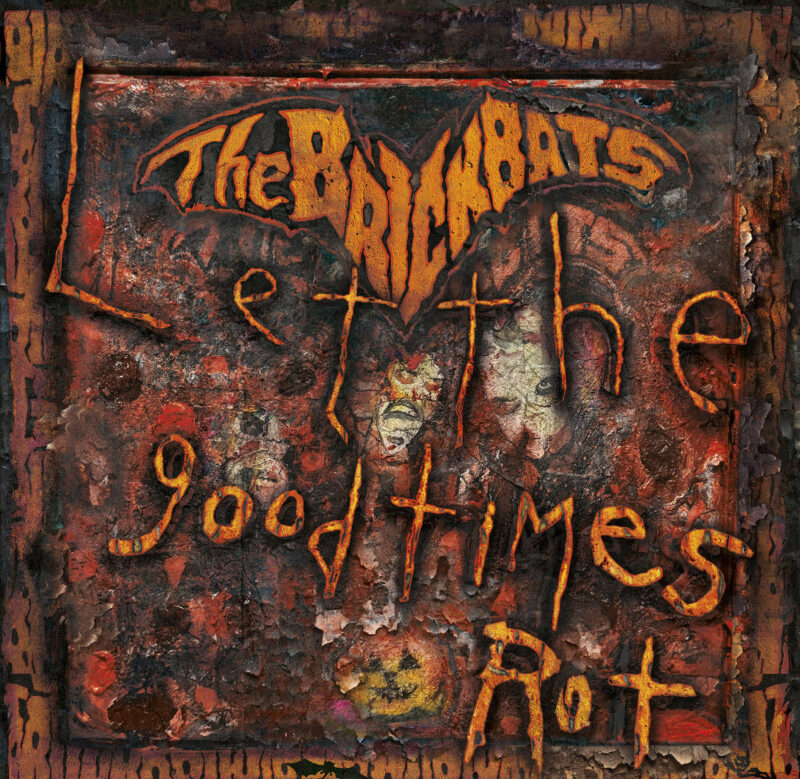
Gorey, Friend, and bassist Paul Morden recorded their long-lost fourth album, Let the Goodtimes Rot, with Jacques Cohen at The Space in Poughkeepsie, New York, in May and June 1999. But the record sat unfinished after the trio went on hiatus around 2000 when bassist Paul Morden headed to California to play with Gitane DeMone. Friend and Gorey salvaged the deteriorating reels and completed the songs; Gorey mixed the record, and Jeremy Hayes mastered it for its November 6, 2026 release. Twenty-seven years later, it still sounds impatient. The trio gets through thirteen songs in just over twenty-five minutes, changing pace every time you think you’ve got the measure of them.
DW Friend tumbles into the album’s title track, Let the Goodtimes Rot, with a drum fill, and Corey Gorey rakes out a jagged riff with one heel planted in old rock ’n’ roll. The refrain makes a whole-room singalong out of ejecting the guest who’s been killing the mood. Then Paul Morden’s spring-loaded bass sets up Apt. of the Werewolf, and the guitar and drums come crashing in. Gorey starts out sounding almost neighborly, then his words come quicker and give way to a howl. The rent is low enough to justify budgeting for silver ammunition. And New Yorkers have signed worse leases.
The kick drum knocks its way into Goosebumps, where a blues guitar answers Gorey’s gravelly honky-tonk drawl. The suitor offers his sweetheart a freshly extracted eyeball, then has to keep track of it when it rolls away. The guitar thickens into a steady chug and drops back into its easy swing, as if this were a perfectly ordinary second date. Friend’s next opening fill sends Too Bad Yuh Gonna Die straight into a crash of guitar, with Gorey delivering the bad news like an undertaker who’s already running behind. The refrain comes around too fast to give anyone time to argue.
On Reverb Vamplifier, the guitar tears through a surf riff, the drums keep up a merciless stomp, and the vocal melody has the lift of classic rockabilly. An icy guitar figure and a wash of keys briefly interrupt the charge, as if the secondhand amp in the song has started to act up. Its knobs are made from bones and it houses the ghost of a roadie who died fetching Elvis a drink. The repair shop is going to have questions.
Gorey gives the King’s vowels an affectionate workout on Orange Shades, and the trio turns the bounce of “Blue Suede Shoes” into a full-tilt punk charge. The indignation over a $3.50 pair of sunglasses has the force of a man defending the deed to Graceland. More Red Wine eases into a surf saunter, with a touch of Dave Vanian’s poise circa “Eloise” in Gorey’s baritone. The song follows a woman tangoing through the small hours on Delancey Street. An altercation between her heel and a bottle of port does little to slow her down. The musicians give out first.
Friend’s opening toms summon Rock and Roll Ghost-A-Go-Go Show (Show), a Friday-night invitation to raise the dead for a three-chord set. Gorey rattles off the verses, and the chorus comes back with the weight of an Oi! gang chant. Then Theme from Frankenstein’s Hangover staggers through a bluesy surf riff like Herman Munster attempting the stairs. The beat keeps losing its footing, the guitar slides down the frets, and the monster groans as if someone has just switched on the overhead light.
The apparent heir of the dog for a monster hangover is Boozecan, where metallic percussion and clipped guitar sound like a rhythm section assembled from the empties. Gorey growls through an inventory of whiskey with a Tom Waits rasp, and the chorus takes on the swing of the Pogues as the drinkers move on to the next bar and leave the bill to management. The guitars chime over a hard, quick drumbeat on Rattle My Chains, and Gorey gives the poltergeist one of the album’s sweetest melodies. He sings the threats like a come-on. All of a sudden the Ouija board sounds like a singles line.
Creepsville takes the long way home. Morden starts it with a gentle bass figure that has some of the Doors’ slow, gothic sway and a curious kinship with what Interpol would play a few years later on “Leif Erikson.” The guitar picks up the bass’s accents, leaving Gorey room to greet the town’s visitors by name and give them driving directions that end with their eyes shut. By the time the guitars bear down, the place is starting to feel like the setting of a Shangri-Las death disc or Hot Chocolate’s “Emma.” Giving the town four minutes to introduce itself lets the joke curdle into genuine unease. It’s the finest bit of pacing on the record.
We Gotta Go settles things in under a minute. A burst of Misfits-speed rockabilly finds the bartender running out of patience and daylight doing wonders for everyone’s decision-making. For a record that took twenty-seven years to get through the door, Let the Goodtimes Rot knows exactly how to make an exit.
Let the Goodtimes Rot is out now digitally and on limited-edition 12-inch vinyl. Order the album here.
The Brickbats’ original run yielded Sing You Dead, Creepy Crawly – The Unauthorized Autobiography of Undead Rock and Roll Music, and Monster Party. During the hiatus, Gorey and Friend formed The Brides with bassist Gregjaw and keyboardist Julia Ghoulia. After Morden’s death in 2006, the two returned to the stage as The Brickbats for a pair of shows in his memory in 2013, with Jason Trioxin on bass. Return of the Living Brickbats followed in 2016.
After Trioxin’s death, Gregjaw took over on bass and continued recording with the band until his death in January 2026. Gorey and Friend now work as a duo, using a rewired guitar setup to cover the low end as they write new material and prepare further catalog reissues.
Follow The Brickbats: