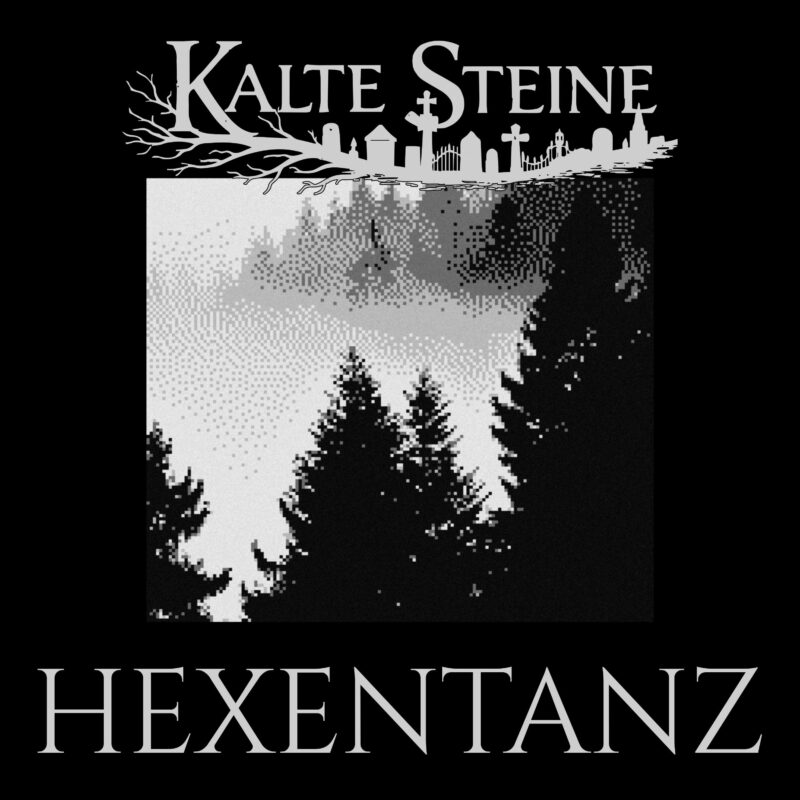
Zum Hexentanz
Das Feuer brennt so heiß
Und wir verlieren uns im Kreis
Walpurgis Night gives the arrival of May a deliciously disreputable reception. Across Germany’s Harz Mountains, the night of April 30 into May 1 belongs to bonfires, witches, and the prospect of meeting the devil on the Brocken. The season of flowers and fertility arrives with a warning to watch the skies.
Its fires share the calendar with Beltane, the Gaelic festival welcoming summer, when flames also served to protect livestock and ensure good fortune. Six months later, Samhain marks the beginning of winter, its celebrations haunted by returning souls and spirits abroad after dark. Together, these distinct traditions suggest that changing seasons demand more than turning a calendar page: somebody must light a fire, gather the neighbours, and acknowledge whatever might be moving beyond this mortal plane.
Leipzig darkwave project Kalte Steine brings that apprehension into Hexentanz, a German-language single premiering just before All Hallows’ Eve. The song draws on the musician’s childhood near the Harz, where the geography of everyday life comes furnished with some distinctly unusual local residents.
“I grew up in the foothills of the Harz Mountains. There are many old myths and legends surrounding the Harz.”
Among them is the witches’ annual gathering, held at the devil’s invitation. In the account behind the song, they assemble at the Hexentanzplatz, the Witches’ Dance Ground above Thale, circling a fire before flying onward to the Brocken, also known as the Blocksberg. Presiding over proceedings is Watelinde, the head witch named in the lyrics. These stories attach themselves to places people can visit; the region’s Walpurgis celebrations still turn that imagined company into a very public occasion.
The song opens with Low piano notes and storm sounds that set the scene before a cold, melodic guitar figure emerges. Crows caw across the introduction, while the bass supplies a brooding weight beneath the tune. The drum machine moves with the steady insistence of footsteps along a wooded path, giving the arrangement a physical direction. Brief keyboard pulses disturb the spaces between instruments, small electric shivers that make the surrounding quiet feel occupied.
The lyrics follow two companions into the Harz, where mist gathers among firs, and Watelinde welcomes them to the fire. Old songs and spells accompany a dance that accelerates until the light disappears. Morning finds the clearing empty, the flames extinguished, and only a whisper remaining: an assurance that the gathering will return at this time the following year.
The German vocal carries both apprehension and attraction, as though the invitation has already been accepted despite everything its recipient knows. When the chorus arrives, that tension acquires a romantic charge: the repeated title beckons, and the guitar beneath it catches the cold brightness of moonlight through branches. Those recurring synth accents add little pricks of unease without interrupting the melody. Fear and pleasure move at the same pace, each giving the other a reason to continue.
Kalte Steine leaves enough space around these parts for the forest to seem larger than the recording. The piano, birds, and storm establish the setting; the restraint sustains it. By the time the lyrics reach the deserted clearing at dawn, the night has acquired the intimacy of a shared secret, with another arcane meeting already penciled into next year’s calendar.
Listen to Hexentanz below:
Based in Leipzig, Germany, Kalte Steine works across post-punk, darkwave, and synthpop, moving between German and English lyrics. Early singles Shattered, Dysthymia, Wüste aus Beton, and Kinder der Nacht explored isolation, urban estrangement, and nocturnal escape, as discussed in our first feature on the project. Subsequent releases Crying Out, Drowning, and Love Is A Lie extended that vocabulary into social distrust and romantic disappointment. Hexentanz brings those nocturnal instincts back to the folklore of home.
Follow Kalte Steine: