


There’s a peculiar weight to songs from 1993—the kind that settles in the bones differently now than it did then. Back when The Smashing Pumpkins first released Disarm, its listeners were children, teenagers, half-formed people trying to make sense of feelings they didn’t yet have the language to name. Three decades on, those same listeners have grown, carrying the sediment of those years with them. Memory has done its usual work: sanding edges, tinting everything in a wistful sepia, even the parts that hurt. Especially the parts that hurt.
Disarm was never a comfortable song. It arrived like a confession disguised as a lullaby, its sweetness masking something far sharper beneath. Billy Corgan later framed the song as a response to the damage inflicted by his parents, not with raw fury but with beauty—choosing tenderness as a weapon and letting the song carry the hurt he could not express more directly. The mordant irony, he noted, was that it went on to become his mother’s favorite track on Siamese Dream.
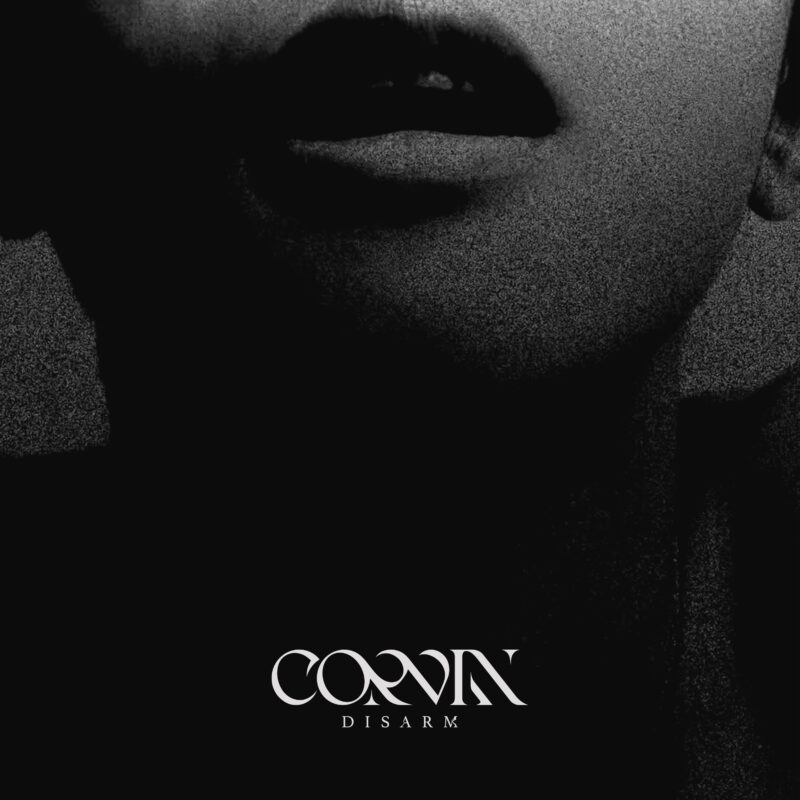
That tension between tenderness and accusation is what has kept Disarm lodged so deeply in people’s lives. Decades later, it still feels like a song that knows how memory softens nothing, only stains it with a warmer light. Corvin understands that instinct. Rather than flatten the song into a straightforward remake, they preserve its ache and deepen its atmosphere, drawing out the warmth in the melody and wrapping it in resonant guitar tones, deep bass, and a stately sense of drama.
Their take does not try to overpower the song so much as inhabit it from another angle. The arrangement gives the sorrow more body, the longing more room, and the nostalgia a darker glow. It feels less like an act of reinvention than one of recognition, as though Corvin have found the gothic heart that was always beating inside the song and brought it further into the open.
On the approach they took with the cover, Corvin explains:
“We chose Disarm as our second single because of its unique melancholy. The original song is stark and fragile—it almost feels unfinished, the perfect canvas for a gothic rock reinterpretation. With distorted guitars and drums, we tried to push its emotional core into darker territory and make it our own. The violins you hear were performed by Norwegian musician Sareeta… we couldn’t be happier with how the final result turned out.”
Directed by Underroom Studio, Corvin’s video for Disarm unfolds like a private rite conducted in the half-light of recollection.
An older man sits alone in a candlelit room, surrounded by objects that feel less like décor than evidence of life once lived. A thick, timeworn book rests in his hands—its pages heavy, reluctant, as though each one carries a history that resists being revisited. He turns them slowly, deliberately, the gesture somewhere between study and self-punishment.
There’s a domestic stillness to the space—fireplace, wooden floors, soft amber light—but it never settles into comfort. The camera lingers on small, telling details: the tremor of a hand against paper, the glint of glass as liquor is poured, the quiet ritual of drinking alone. It’s a language of gestures, each one suggesting a life lived in uneasy dialogue with its own past.
Intercut with this solitary figure are the band themselves, emerging from darkness under stark, suspended lights. Their presence feels almost accusatory, as if they are manifestations of memory rather than performers—voices given form, standing just outside the man’s reach.
The video’s most striking turn comes as the act of remembrance becomes destruction. Pages are torn free, fed to flame. Fire consumes what was once carefully preserved, the past reduced to ash in an attempt—futile or necessary—to finally let it go. The imagery doesn’t offer resolution, only transformation: memory burning, but never entirely disappearing.
It’s a simple premise, but executed with a painter’s attention to tone and texture, where everything glows with the same warmth the song evokes.
Watch the video for ‘Disarm” below:
Rising from the overlapping worlds of Me and That Man, Shores of Null, and beyond, Corvin are a newly formed entity rooted firmly in gothic rock’s lineage, yet unafraid to thicken its shadows. Their sound thrives on contrast—force and fragility, weight and restraint—turning emotional tension into something tactile.
This cover of Disarm doesn’t attempt to replace the original. Instead, it stands beside it like a later chapter, written by those who have lived long enough to understand what the song was really about in the first place.
Because if Disarm once belonged to youth—to confusion, to unformed pain—then Corvin’s version belongs to what comes after: the long reckoning, the slow burn, the quiet realization that the years don’t just pass.
They stay with you.
Corvin’s cover of The Smashing Pumpkins’ “Disarm” will be released as a physical single CD on March 20th, 2026, and it will include the band’s debut single, Dead End Pyre.
You can order the CD here.
Follow Corvin:





 Or via: