


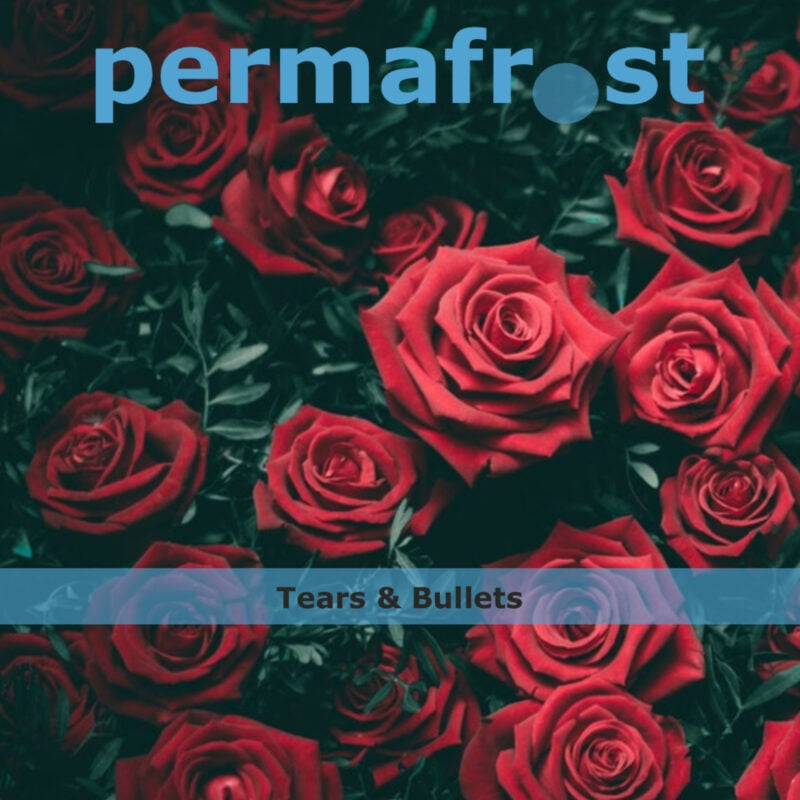
Permafrost returns with Tears & Bullets, a three-track EP released via their own Fear of Music imprint. It arrives with the quiet assurance of a group that has learned how to wait—how to listen, how to let distance sharpen intent rather than soften it. Time has not thinned their resolve. It has tightened their grain.
Formed in Molde, Norway, in 1982 by school friends Frode Heggdal Larsen and Kåre Steinsbu, Permafrost have lived several lives. Taking their name from a Magazine song, the band’s musical DNA draws from Joy Division, Pere Ubu, Fad Gadget, Yello, Talking Heads, Wire, The Residents, and Wolfgang Press—post-punk approached as creativity rather than doctrine. That exploratory impulse carried them from the hand-numbered cassette release of their 1983 debut, Godtment, through long periods of silence and reconfiguration, to their return on vinyl with the Permafrost EP in 2019 and into the present moment.
Membership shifted. Cities changed. Decades slipped past. By 2001, Robert Heggdal and Trond Tornes had joined the fold; in 2016, Daryl Bamonte—long associated with Depeche Mode and The Cure—entered the picture. Tornes departed in 2022, leaving a leaner formation now spread between Trondheim, Oslo, and Margate. Geography complicates things. Permafrost learned how to work with it anyway.
During the long pause of the pandemic years, the band kept a ritual: weekly video meetings, fragments exchanged across screens, songs assembled piece by piece. A spark from one member becomes structure in Logic Pro, shaped by Heggdal’s bass instincts and programmed rhythm. Steinsbu finds the melodic line, lifts words from a shared vault of phrases gathered over years. Files move back and forth. Adjustments accrue. Consensus arrives quietly. The process carries the calm of craft learned over time.
That patience is audible across Tears & Bullets. The title track opens with a glacial, steady bassline rooted firmly in classic ’80s post-punk and college rock, its pull familiar but never nostalgic. There’s a trace of Cocteau Twins and Comsat Angels in its movement, grounding the song before it lifts. Steinsbu’s vocal arrives crisp and clear—like a warm breath caught in winter air—softened by harmony as it settles in.
Guitars ascend with quiet optimism, their melody shaped by the clean directness of The Cure, while keys sparkle gently, light breaking through a clouded sky and catching on snow. The chorus opens without strain, buoyed by restraint rather than force. It’s a song that warms gradually, finding momentum through balance: hope carried forward by precision, emotion held steady rather than spilled.
“Nightmare” enters differently. A rapid, softened metallic figure announces the track, immediately setting it in motion. Guitars swirl with layered effects that nod toward college rock and shoegaze, widening the frame, while the bassline thickens beneath them, heavier and more insistent. At the center, an analog key melody rises and falls, its motion hypnotic, breathing in long arcs.
The drums propel the song forward with stalwart resolve, giving “Nightmare” a sense of forward momentum even as it stretches outward. At times, the track truly soars, not through excess, but through accumulation—space, repetition, and lift working together. The vow at its core feels steady rather than dramatic, an insistence sustained by movement and trust rather than urgency.
The EP closes with “Another World,” shifting the temperature once more. There’s an almost jazzy modern groove to the keys here, recalling a lineage that stretches from the ’60s through the ’80s, fluid and conversational. Against that, the guitars remain firmly rooted in classic ’80s form, their melody hooking immediately without overstating its case.
The bassline stays buoyant but measured, carrying the song without drawing attention to itself. Vocals turn inward—thoughtful, slightly somber—tinged with distance and daydreaming. It’s less a gesture of escape than a moment of introspection, choosing presence over movement, dreaming while staying grounded. As a closer, it doesn’t resolve everything so much as hold the ground it’s claimed.
Tears & Bullets stands on restraint and resolve—three songs shaped by musicians seasoned in songcraft, whose blend of post-punk, alt-rock, and shoegaze cascade into something that can still bloom in the dead of winter and refuses to wilt with time.
Listen to Tears & Bullets below:
Follow Permafrost:




 Or via: