


I flee onto the streets, birds chirp in ease, as my heart beats.
The door flings open, words unspoken, I breathe:
This alley is mine.
From the Netherlands arrives Bragolin, a project that treats motion as a principle rather than a flourish. Edwin van der Velde builds songs the way a physicist sketches trajectories: attention fixed on force, velocity, and the invisible pressures that bend a path. Post-punk tension and dark-wave control coexist in their sound with an almost scientific patience, each element set in relation to the next. The result feels alert, forward-leaning, and acutely aware of the space it occupies, as if every second has been measured before it is released.
I Run and Hide unfolds inside that framework: the track moves at a quickened pace, breath tight, steps close together, carrying the listener through streets and out into open land where familiarity erodes under stress. Ordinary locations lose their neutrality. Silence thickens. Time contracts. Each attempt at refuge collapses, and repetition becomes a law rather than a choice. The structure loops back on itself, mirroring the psychology of flight, where progress exists but resolution remains out of reach.
Every sound you hear in this track, amazingly, comes from layered Clavinets. The absence of guitars clears the field, leaving a wiry, insistent texture that presses forward with clipped resolve. There’s a lineage here that points toward the emotional restraint of Pink Turns Blue and the poised minimalism of early Human League, distilled into something lean and focused. The speed never turns reckless; it stays disciplined, calibrated, and exact, reinforcing the sense of pursuit rather than overpowering it.
Lyrically, the song inhabits a cycle of escape that never widens into freedom. Running becomes routine; hiding becomes habit, fear stops being a spike and settles into rhythm. The repetition is structural, mirroring how panic reorganizes thought. The listener is pulled into that loop, asked to inhabit its logic rather than observe it from a distance.
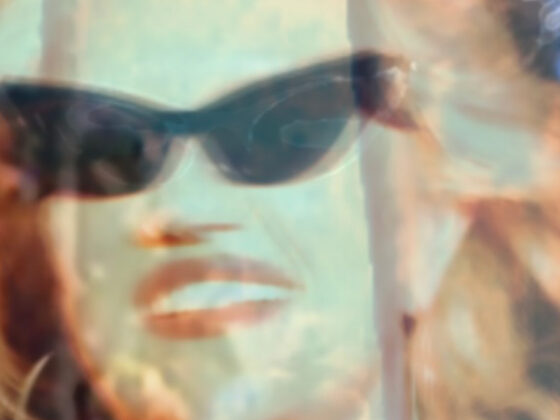
The accompanying video, directed by Maria Gaedcke, extends this logic into the visual realm. A woman exits a house at dusk dressed in a white nightgown, immediately exposed against the deepening light. Her movement through empty streets feels urgent yet disoriented, the image fractured by lagging frames and soft focus. As the setting shifts to a cornfield, the environment grows more abstract, less anchored to place. The camera hovers between watcher and follower, collapsing the distance between observer and threat. The effect recalls classic horror pursuits, where the terror lies less in what is seen than in what is implied, and where motion itself becomes the primary language.
This sense of shared perspective is crucial. The viewer is never granted a position of safety. Instead, the framing insists on proximity, aligning perception with acceleration, breath, and imbalance. The chase is continuous, unresolved, and stripped of spectacle, allowing unease to accumulate through duration rather than surprise.
Watch the video for “I Run and Hide” below:
Bragolin’s path to this moment has been deliberate. Since their 2018 debut I Saw Nothing Good So I Left, the project has grown into a recognised presence within gothic circles across the globe. That history matters here, because I Run and Hide feels informed by distance traveled and ground covered, by nights spent refining restraint rather than excess.
Now, the track opens the door to Bragolin’s third full-length, I Don’t Like What It Does To Me, a release planned in stages across 2026. The album’s slow reveal mirrors the music’s own attention to pacing and consequence. This chapter will culminate in a release show at De Helling in Utrecht on April 2, a fitting setting for a project that understands space, pressure, and the quiet gravity that keeps bodies and ideas in motion.






 Or via: