
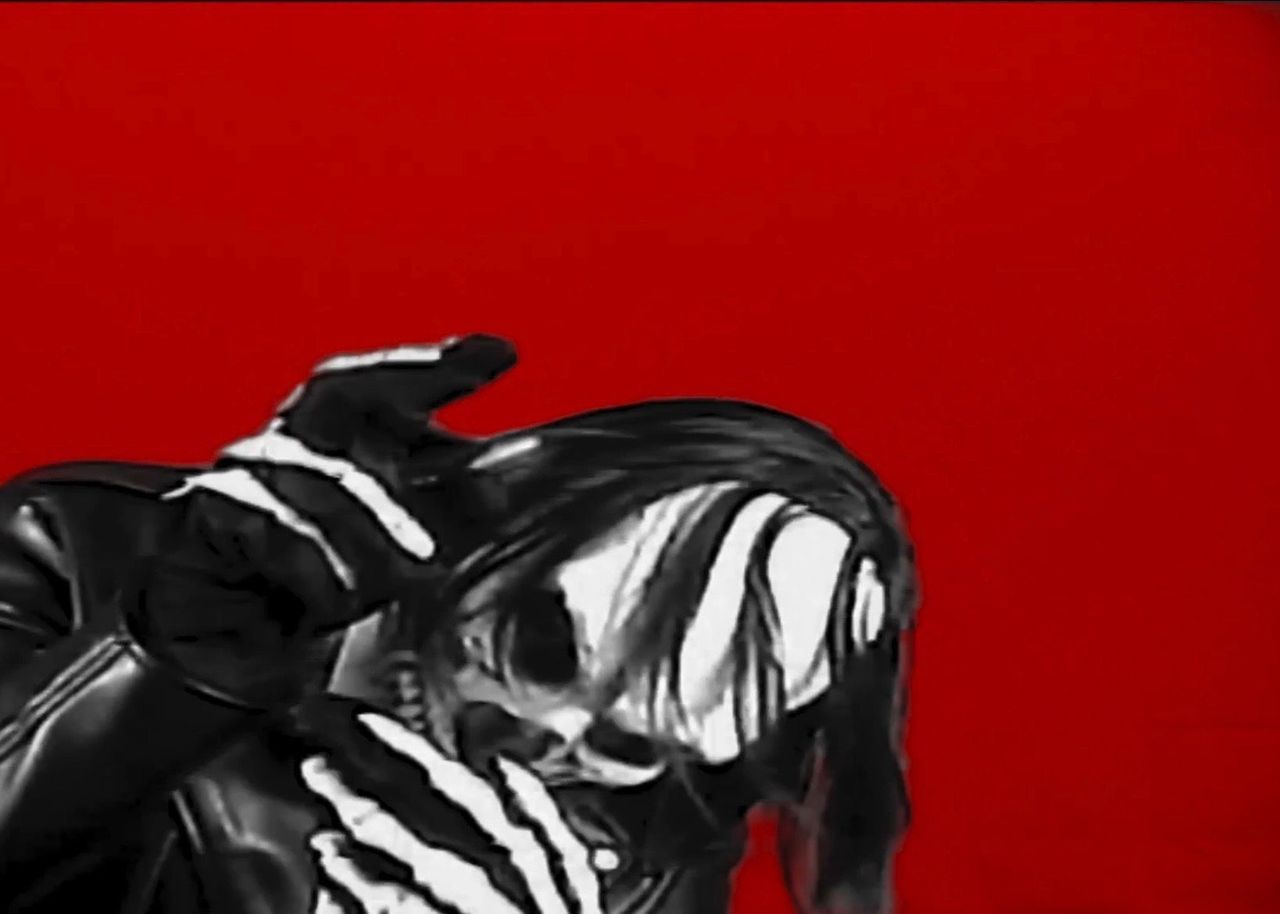

Cloaked in the skin, of flesh and blood and bones
Of the one now buried deep down below
Stand before this copy, move between
Take me by the hand, take this life from me
There are artists who move between mediums as though crossing from room to room in the same house. E.K. Wimmer wanders that corridor with a steady hand. Known widely for his work as a film composer (particularly his score for the 2018 documentary Scary Stories, which traces the uneasy folklore of Scary Stories to Tell in the Dark), Wimmer has long understood how sound can press against an image until it breathes. In Albuquerque, under the name Blood Relations, that instinct turns inward and burns low.
Drain the Light carries the hush of a chapel before the service begins. A church organ opens and closes the record, tolling in slow arcs, as if marking time for the living and the gone. “Drain the Light has been the longest I’ve ever worked on a record, not just with Blood Relations, but with any solo project or band,” Wimmer says. The songs were written, set aside, returned to, and searched again for the right words. He speaks of shelving tracks, of resuming them after Ritual, of finding the thread at last: “I wanted the whole album to be tied together through this dark church organ, which opens and closes the record, almost like a funeral service. Death has always been a constant theme…however, Eulogy was an album mostly about the loss of my parents, whereas Drain the Light is album about the loss of friends and even the death of oneself to an extent.”
The record settles into a classic Deathrock cadence: lean guitars, graveyard rhythm, guided by the spirit of Specimen, Skeletal Family, Altar De Fey, 13th Chime, and kindred outsiders from Japan, Spain, and Switzerland. Wimmer once allowed Blood Relations to shapeshift freely; here, he chose focus. “It was really important for Drain the Light to not be too many sub-genres shoved together. I wanted a straightforward album that wasn’t too confusing to describe, and so I settled on a classic Deathrock sound.”
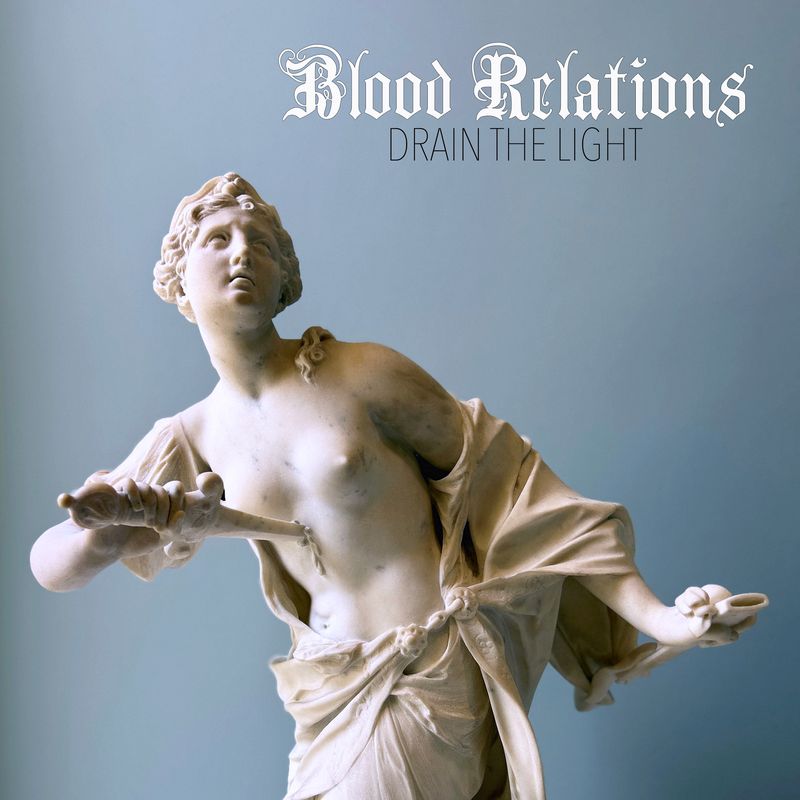
Ash recurs in the lyrics: fire’s remainder, cremation’s quiet. He considered naming the album Ashes, but reverence intervened. In Paris, wandering The Louvre, he found instead a sculpture from 1711—The Death of Dido by Claude-Augustin Cayot. Paired with the line drain the light from Crack the Sky, the vision fixed itself. Stone, song, and memory met. The title was waiting.
After the haunting organ instrumental opener All That Remains, Watch Them Fall is a meditation on survival’s burden, steeped in the ache of outliving those once held close. The gloomy musicality is immediate: a haunting deathrock guitar line circles overhead while the rhythm section moves with graveyard patience. Wimmer’s crooning feels like a lone figure howling at the moon, voice stretched between endurance and exhaustion. Each passing feels abrupt, unfinished; ash gathers at the song’s edges.
On Crack the Sky, the tempo tightens, but the mood remains stark, channeling the passionate vocals of Curses here, especially. Restless and fevered, it moves through dust-choked memory and sacred violence. The gloomy musicality takes shape in churning minor-key riffs and tom-heavy percussion that thuds like distant artillery. Figures run across a barren landscape, wounded yet upright. The horizon splits open, light drained away, leaving isolation ringing through reverb and restraint.
Night Folds In leans into gothic unease. Identity loosens its grip as the living confront their own reflection. The gloomy musicality here is spectral and slow-burning: echo-laden guitars shimmer in cold arcs while the bass stalks beneath. Burial and doubling hover at the margins. The self recedes; what remains feels borrowed.
With The Waxing Moon, intimacy settles into still air. The gloomy musicality softens but does not brighten—clean guitar lines glisten under a patient drum pattern, as if suspended in silver light. Sensation fades into a dream. The track drifts without urgency, surrender arriving like a tide that never turns. Return Me sharpens the ache. A plea rises from emotional vacancy, framed by brittle guitar and a bassline that moves like a pulse under glass. The gloomy musicality underscores estrangement from one’s own flesh. Regret hangs thick; there is no refuge for restless bones.
On Crawl into the Flames, earth and fire converge. The gloomy musicality grows heavier: distorted chords grind forward while drums march with ritual insistence. Roots twist with veins; sorrow reshapes the body. Submission feels inevitable, transformation slow and absolute. Death Never expands the scope. The gloomy musicality here feels vast, almost liturgical, with sustained guitar tones and measured percussion echoing into open space. Love persists beyond the grave’s seal. Death stands patient and absolute; devotion presses onward into the void. Black Candle turns ritual inward. The gloomy musicality flickers in tight, circling riffs and a bassline that coils with intent. The act of lighting becomes reckoning. Ash and bone mark the aftermath; desire burns low and controlled.
Closing with I’ll Still Remember, the album exhales. The gloomy musicality remains steadfast: measured drums, restrained guitar, a voice worn but steady. Memory becomes a sanctuary. Acceptance arrives without spectacle. What lingers is recollection held close, as the final notes recede into quiet dusk.
Listen to Drain The Light below and order the album here.
Blood Relations:







 Or via: