


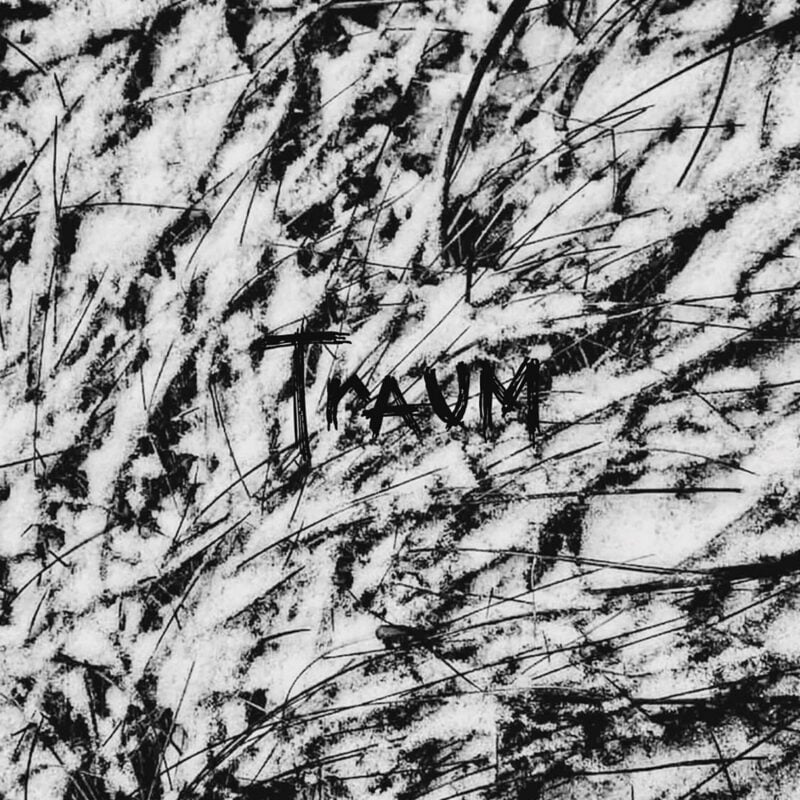
Travm’s tale begins on Minsk pavement, two young bodies tuning themselves to the clatter of machinery and the fractured poetics of post-punk. Their world: patriarchal, authoritarian, crushing – made no room for them, so they built one from scrap metal, static, and stubborn breath. Music became an oxygen mask, a way to push back against police truncheons, creeping war, and the small, grey obedience that keeps both alive.
Their evolution mirrors their exile. Russian lyrics gave way to Belarusian, a language drifting toward disappearance, in the same years, they shifted from hopeful citizens to political refugees. Their art now grows from that spiritual split: echoes of 80s experimentation welded to the dystopia they’ve walked through, the kind of landscape that carves its marks into the skull.
“We never fit into a patriarchal, authoritarian world, so we carved out our own,” says the band. “Music is the space to breathe, react, and push back against police violence, war, and quiet conformity.”
In 2022 the rupture became permanent. Albert fled Belarus for Poland, barred from returning by state repression and the drumbeat of war. Andrei stayed behind in Minsk, held there by health limitations. Their partnership narrowed to a digital pipeline: fragile, necessary, alive. “This project lets me stay close to Andrei,” Albert says. “It helps us break through distance and everything that stands in the way. At least inside this small, virtual world.”
“Siabra” (Belarusian for “a friend”) moves at a deliberate crawl, carrying a heavy, unshakable ache. The track trudges forward rather than surges—its pressure drawn from post-industrial restraint, a muted electropunk burn, slow noise abrasion, and No-Wave marrow. Nothing here reaches for drama. Instead, it feels like someone dragging their own past behind them, step by measured step.
Its lineage glances toward the angular sting of Pixies, the uneasy hum of Throbbing Gristle, and the stark, unsparing pulse of Malaria!, but the emotional center remains singular—rooted entirely in the shared history of the two who wrote it.
The accompanying video for Siabra was filmed in Warsaw and Minsk, mirroring the split life they can’t escape. “Distance shaped the idea. So did the strain it places on friendship and creative process,” they explain.
The video follows a wandering figure, moving through darkness toward a new dawn. it is surreal, the figure is dealing with a cumbersome obstruction on his head, unable to navigate his space well. draws from the strange isolated worlds of Man Ray, Rene Magritte and Maya Deren. Its central image, one body struggling to see, to balance, to move, feels like an unwelcome prophecy. Andrei delivers the hardest line quietly, as if exhaling: “This might be the last video where I appear walking. A few months after filming, multiple sclerosis took that ability from me.”
Watch the video for “Siabra” below:
What Travm offers through Siabra is a record of the distance between two friends, and a refusal to allow that distance to erase anything…even when the world does its best to try.
Listen to Siabra below, and order here.
Follow Travm:




 Or via: