


Take my hand,
Let me show you how the night runs out
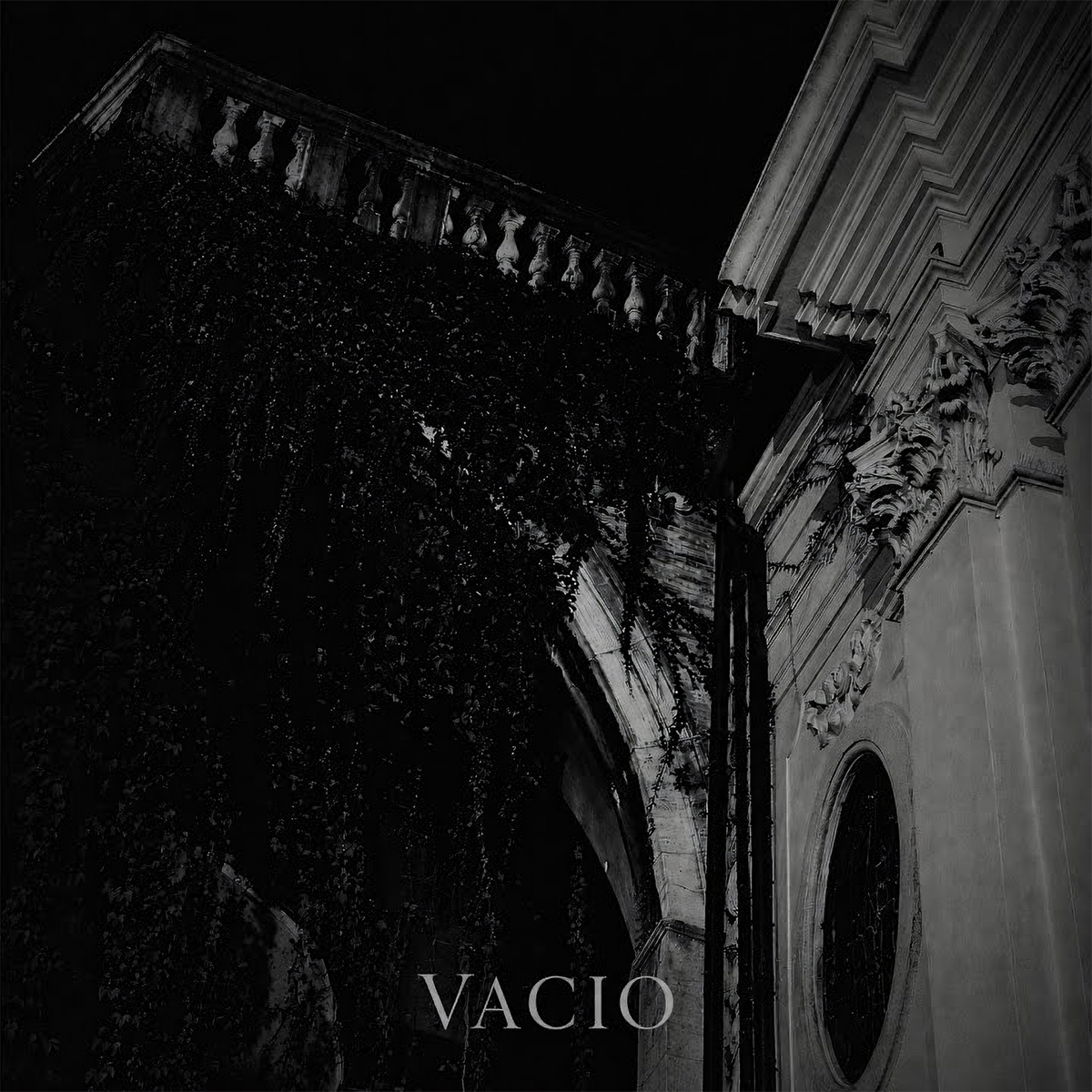
Denver’s Devoratus make darkwave with a clenched jaw and a dancer’s thrust, and Vacio, their EP whose title translates from Spanish as “Empty” or “Void,” turns that tension into a lean, bruised little machine. The current lineup—Tomas on vocals, Aero on synths, Renee on bass, and Cisco adding live guitar—works from familiar gothic materials, yet the record has a focused personality: dry humour at the edge of despair, Spanish-language ache beside English plainspokenness, and club velocity pressed against private collapse.
The production favors cold angles and thick low end. Synth parts hang in the air like metal under moonlight, while Renee’s bass gives each track a stalking physicality. Aero’s keys cut through with glassy discipline, sometimes framing the beat, sometimes needling it, while the guitar’s presence traces the shadows into a sharper human shape. Tomas sings as if addressing someone across a locked room, his voice grave, close, and melancholic, carrying the EP’s themes of isolation, desire, mortality, and change without turning them into costume drama or diary theater.
Abismo oscuro comes out of the gate with an icy guitar line, cold synths settling over it like a layer of winter frost. The drumming pushes forward with almost punk impatience, while the shadowy vocal line rides the rush with a sense of momentum, doom, and romantic wreckage that recalls Lowlife at their darkest. Lyrically, the song stares straight into death’s mirror: sin is abandoned, the cross is taken up, the end is declared present, and the body is returned to dust. Its devotional language and blunt mortality give the track a ritual severity, less like melodrama than an alarm bell ringing in a freezing room. The song moves fast without losing its shape, giving its gloom a sharp edge rather than letting it dissolve into decorative fog. It lands with urgency, not clutter.
Dance is the release’s most direct invitation to the floor, though its pleasure has a sickly grin. Echoed vocals stretch across atmospheric synths, and the rhythm keeps the body busy while the mind wanders toward less friendly rooms. The lyrics turn the dance floor into both seduction and survival: the Spanish lines suggest instruction, surrender, and a refusal to look back, while the English refrain reaches outward like a hand in the dark. It is not escapism exactly, but movement as a last practical response to ruin. Dance music can carry dread without collapsing into theatre; Devoratus understand that the best grooves can feel useful, almost medicinal, as if motion itself were the only thing keeping the void from closing in.
For You keeps the tempo high but aims closer to the chest. It plays as a fast ballad for someone already gone or maybe still too near, with echo, ache, and forward drive braided into a clean blow. The narrator wakes disoriented, caught in the repetition of not knowing where they are, unable to stop living inside the self. When the song turns toward Spanish, that private confusion becomes a plea for an ending and a way out, not simply for escape, but for another person. That shift gives the track its emotional weight. It is wounded without becoming helpless, romantic without becoming soft. The restraint gives the record leverage: Devoratus leave enough space around the parts, so every bass note, drum hit, guitar slash, and vocal bend lands with intention.
Vacio is compact, stylish, and severe, yet it breathes. Its emptiness is not blankness, but pressure: the absence one dances through, prays against, wakes inside, and tries to outrun. Fans of Forever Grey, Lebanon Hanover, She Past Away, and other cold-hearted romantics will recognize the alleyways it traverses, but Devoratus walk them with their own private map. This is gothic dance music with bite, brains, and bleak charge for rooms already leaning toward the dark.
Listen to the Vacio EP below:
Follow Devoratus:







 Or via: