


What’s left behind when the reverb ends
What were we If no sound remains
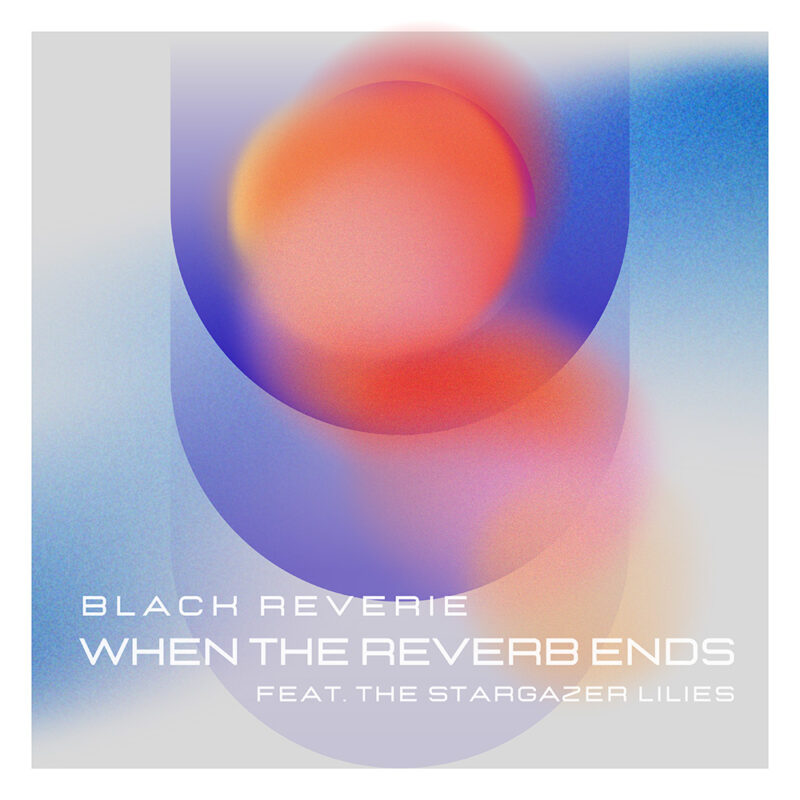
When the Reverb Ends is a song title that immediately suggests aftermath: the instant when atmosphere clears, when sensation settles, and whatever was buried beneath volume and echo is left exposed. Black Reverie, a project conceived by Sebastian Lugli of Rev Rev Rev and joined by players from Desert Ships, The Stargazer Lilies, and We Melt Chocolate, introduces itself with a debut that treats texture as more than mere adornment. Beneath the gossamer wash of guitar and reverb, there is a careful emotional architecture at work, one that gives the song its shape and quiet force.
The track draws from familiar psych and shoegaze lineages, yet it carries itself with elegance. You can hear echoes of My Bloody Valentine, The Jesus and Mary Chain, The Warlocks, and Sixties psych (think Nuggets), but those references are folded into something more personal: a piece that values atmosphere while still trusting melody, tension, and restraint. Lugli’s glide guitars and tremolo lend the arrangement a sense of motion that feels at once fluid and disorienting, while the bass provides a grounded, almost vintage momentum. Above it, effervescent female vocals bring a soft luminosity. The music feels expansive, but it never loses its center. Black Reverie uses reverb, fuzz, and melodic haze to sharpen the emotional impression at the song’s core.
The collaborative dimension is crucial here; the song benefits from that interplay, from the sense that each contribution enlarges its emotional field without disturbing its internal balance.
“Watching Thrashers by Michael Wild, I felt a sensation that words can’t quite explain, but that I tried to give shape to through this music and these lyrics,” says Lugli. That impulse feels guided by an attempt to translate an elusive impression into form, and much of its appeal lies in how gracefully it sustains that effort. “I laid the foundations with a very Sixties bassline and a similarly vintage harmony, then added my guitar sounds on top,” he continues. “The magic thing is that what made this feeling complete were the contributions of Kim and John (The Stargazer Lilies): when I heard their parts, I got goosebumps. They’ve actually given voice to my dreams – that’s the magic of collaborating with artists like them.”
And the dreams in these lyrics poignantly circle memory, distance, and dissolution, asking what remains once echo, noise, and the emotional force of the past have faded. In fact, “When the Reverb Ends” treats reverb not just as a musical effect but as a metaphor for longing itself: the residue of love, youth, or shared experience still hanging in the air after the moment has passed. The repeated plea to “take me back” gives the song its aching core, while images of warp, decay, delay, and far-off stars suggest a search for origin through distortion, as if the speaker is trying to trace feeling back to its source before time and distance swallowed it whole.
Be Hussey’s mix serves the material beautifully, giving the song depth and breadth, but also clarity, preserving its density without letting it collapse into blur. By the close, Black Reverie have answered their own central question in subtle fashion: when the reverb ends, what remains is not emptiness, but contour—feeling held in suspension, then gently brought into focus. For a debut single, When the Reverb Ends makes a striking first impression, introducing Black Reverie as a project with both vision and finesse.
Listen to When The Reverb Ends below, and order the single here:
Follow Black Reverie:




 Or via: