

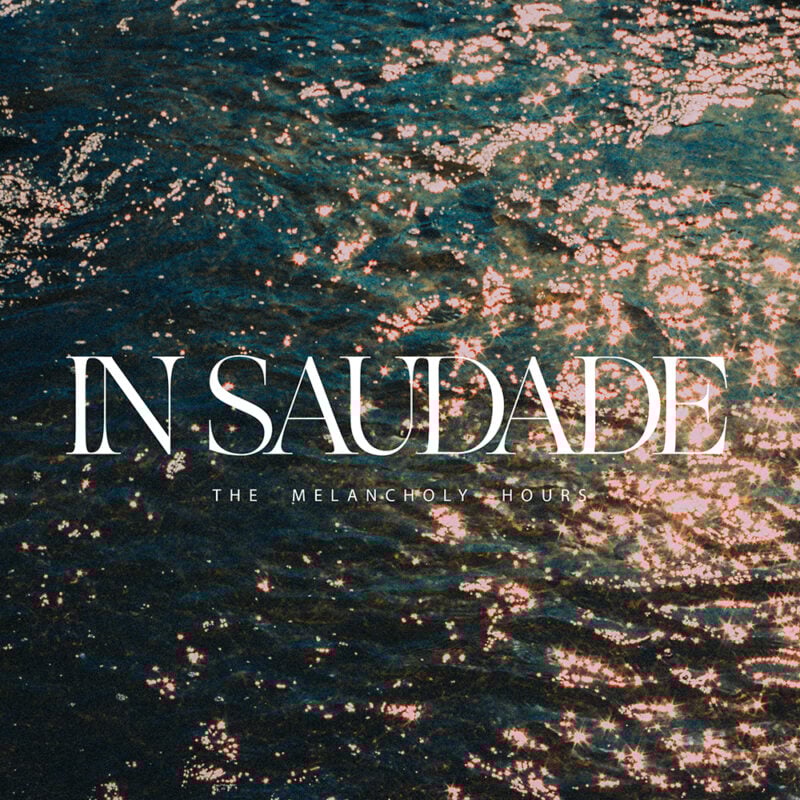
Musician Thomas Bagnoli has long worked in the shadows of experimental collaboration, but The Melancholy Hours marks a turn inward: an exploration shaped by quiet pressure rather than grand gesture. With IN SAUDADE, released through Spirit Goth’s Memorycard imprint, he assembles a suite of ambient instrumentals that feel less like compositions and more like half-kept confidences, passed through cracked light and patient static.
Across its span, the EP moves with a restrained pulse, drifting between soft abrasion and near-weightless hush. Bagnoli doesn’t aim for immersion so much as suggestion—tonal smudges, faded chords, and thin strands of melody that gather and disperse before fully taking shape. Each piece feels tentative by design, circling the edges of recollection without trying to anchor itself to certainty.
Its lineage traces toward Windy & Carl’s long arcs, Slowdive’s suspended instrumentals, and Bowery Electric’s vapour-thin calm, yet Bagnoli pares away the romantic sweep. What remains is spare: tones that tremble at their fringes, small frictions under a soft glow, a sense of arrival that dissolves even as you notice it. The palette holds warmth, but resists comfort; everything here leans into the moment just before memory sharpens, and the moment just after it dims.
Recorded in East London with producer Arthur Pegis, the four tracks unfold like slight studies—examinations of texture, restraint, and emotional residue. Pegis tightens the grain, heightening the contrasts between decay and clarity, letting each softened guitar line or gentle distortion behave like a clue in some private correspondence.
The invocation of the Portuguese saudade signals the EP’s intention: not to explain an emotion, but to gesture toward one that remains ungraspable. These pieces move as though handling a photograph whose subject you recognize instantly, but whose context forever escapes you.
Summer opens with the tentative unfurling of a day not yet decided. A low drone gathers beneath delicate reverberations, while sparse snare taps lightly disturb the stillness. The textures shimmer without urgency, settling into a pale drift that feels almost like light refracted into rain—gentle, momentary, impossible to hold.
Azure steps further inward. Percussion wanders like someone pacing a dim hallway, while the guitar traces darker, inward-turning circles. Scraped tones and muted scratches widen the grain, creating a faint undertow of unease. A slim melodic thread winds through the center, contemplative and unresolved. Breath-like synth pads expand the space until everything dissolves into the hush of water—tide collapsing into memory, memory collapsing into tide.
Vestige hovers in a tremor of pulses, its percussion reduced to soft clatter and distant flicker. The piece evokes classic shoegaze in its sensation rather than in its architecture—its blurred edges signaling something glimpsed rather than stated. A washed guitar line rises, recedes, and rises again, eventually giving way to chords that reach a little further into the light. It feels like the moment a forgotten feeling stirs, only to slip away before you can name it.
Calima closes the EP by opening its largest interior. Guitars expand in slow, cathedral-like arcs, their tones brushed with metallic resonance and drifting percussive shivers. The arrangement glows with a soft, upward pull—never grand, but gently luminous. The chords keep reaching through the haze, gathering everything the record has held back and releasing it in a long, steady breath.
This is music meant for the quiet hours—when the city thins, when thoughts drift unguarded, when every window reflects a half-formed idea. IN SAUDADE offers a place to pause inside that stillness: a space where unanswered questions breathe, and where something once held close returns in the faintest, softest glow.
Listen to In Saudade below and order the album here or here.
Follow The Melancholy Hours:




 Or via: